Interlude: Wilma Shares Breaking Revelations On Bog
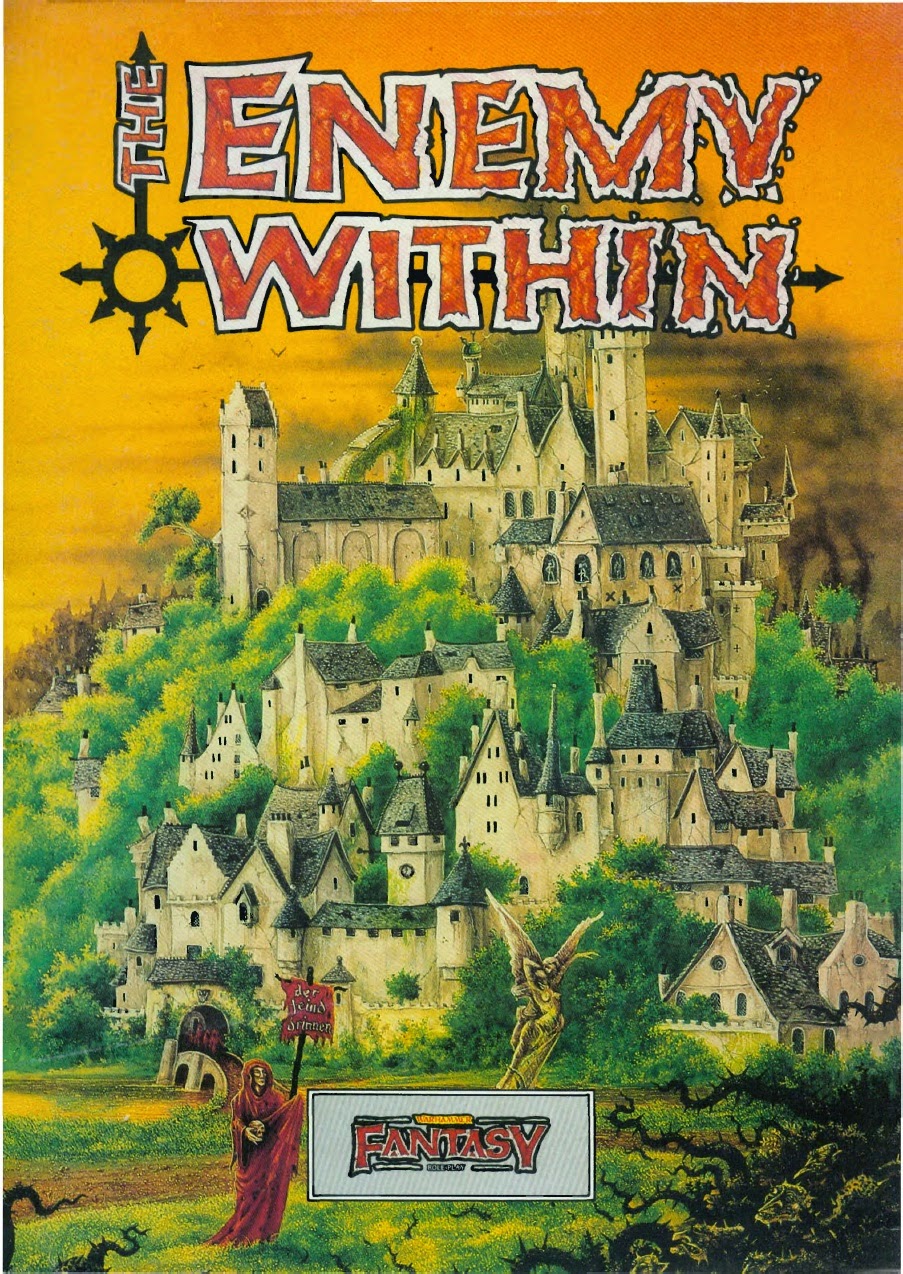
Bogenhafen is a booming town, much like Weissbruck but bigger... the town was rebuilt from its burnt ruins a century ago (exactly a century- the Schaffenfest is an annual celebration of its refounding and it's a hundred years since Prince Adelina issued her Writ of Conciliation, in which she gave perquisites to merchants and crafters to resettle the town.
Much of the modern population of Bogenhafen comes either from the Wasteland or from down the Stir, beyond Nuln. Although the town belongs to Graf von Saponatheim, he chooses not to spend time in his castle there, and the town is run in all but name by the Merchants' Guild and the small number of Merchant Prince families that vie between each other for the huge fortunes to be made from the Vorbergland.
You also find out that the town is a centre for some civil strife. The Writ of Conciliation, which was reinforced a little over a decade ago, gives rights to the Merchant Houses to manage their own labour for portage and storage, rather than be forced to work through the Teamsters' and Stevedores' Guilds. This limits guild work to out of town interests and the Graf's goods and opens a rich seam of ununionized black leg operation. Folk mumble that this is underhanded and seedy and somehow linked to something criminal.
As a consequence of the Wastelander influence and the power of the merchants, the minor God of fortune and profit called Handrych is given great favour in the town. The rich shower Handrych with valuable goods in order to win his favour- and you hear tell that a prized work of art is to be dedicated to the God at the opening of festivities.