Friedrich's Paper (abridged)
Here in Altdorf, around 1150 years ago, the Age of Wars was thought to be at an end. The Elector Counts met here, seeking to end the interregnum and civil war of the previous 2 centuries. Or was it as the Annals of Middenheim and Johannes of Wolfenberg et. al. have it, that in fact there were a series of weak emperors elected, who would pose no threat to the expanded power of the Elector Counts. The details are less important than that great coming together to begin a new age, but we all know how that ended. Count William of Stirland became Emperor with a majority of one vote, and the outraged Countess Ottila of Talabecland swept off back to Talabheim with accusations of vote rigging on her lips, and a claim of Empress without a Vote in her heart. This civil war spilled fresh blood on the already drenched fields of the Land for just under 200 years, when the Age of Three Emperors made things significantly worse.
This we understand, and this we know. Infants know it, the knowledge is so common, and the Gods know that men need little to compel them to violence, with their own greed and a lust for power just beneath the surface of their hearts. If there is an outside hand guiding them, it might be unseen and only visible by the shape it leaves in the history around it. I believe I have found just such a shape – patterns in history, questions with no answers, activity with no explanation.
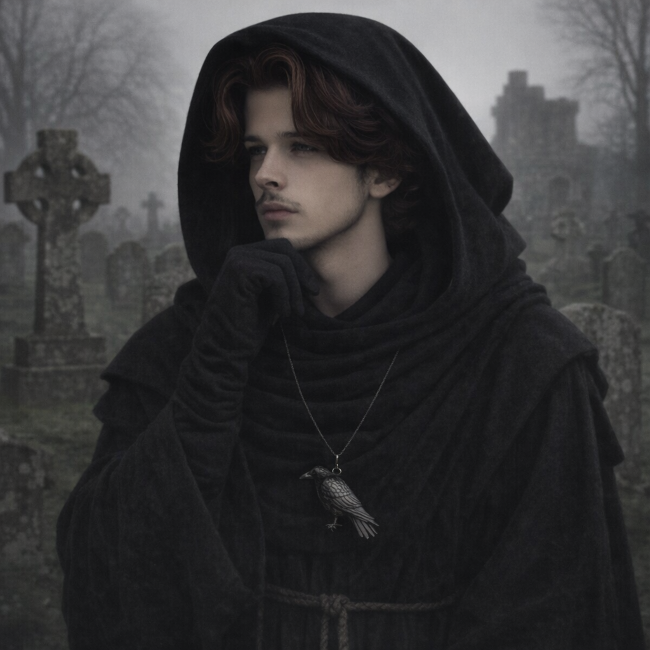
In the annals of both Altdorf and Talabheim there are references to an aide briefly on the Count’s staff, alluded to but never named, fragmentary descriptions. Descriptions which when compared seem very similar; a figure who seemed to arrive and engage in whispered and private conversations with the Counts, and one day went riding into the forest with each of them but only the Count returned. Of the stranger, no mention was made by the Counts themselves, and the Courts seemed to first be unable to recall anything distinctive about them, and then seemed to forget them altogether. The Counts seemed different after returning from the forest, too – a new determination for the proper election of a new Emperor seemed to fire in them, and a certainty that it would be them.
Looking further afield, there are similar happenings alluded to in the annals of the other Elector Counts, or those which remain anyway, at around the same time, but they seem even more fragmentary and brief.
It is my hypothesis that an agent was involved in manipulating those Elector Counts, pitting the two strongest against each other with certainty of victory, knowing that whichever won, a fresh Faultline in the Great Schism would be the result.
I have not yet been able to research this, but I hypothesise that similar traces of this figure’s passing could be found in the annals of Count Siegfrid of Middenland prior to the Age of Three Emperors and his dealings with the Ar-Ulric.
So, who could this agent have been? What society, cult or power did they represent, and what did they hope to gain? These things must remain speculation for now, and speculation has no place in my paper at this time, but I hope that continued diligent study of the source material will provide some answers.
Thank you for listening.